
Type 2 Diabetes Mellitus is a chronic metabolic disorder that exerts a profound, systemic toll on the human body over time. Among its most debilitating and widespread complications is Diabetic Peripheral Neuropathy (DPN). Affecting nearly 50% of all adults with long-standing diabetes, DPN is a progressive neurological condition that irreversibly damages the peripheral nervous system.
Because the progression of the disease is incredibly insidious, recognizing the early peripheral neuropathy symptoms is paramount.—often beginning years before a patient notices a definitive loss of sensation—recognizing the earliest clinical symptoms is paramount. When left unmanaged, the sensory deficits caused by DPN lead to a catastrophic cascade of complications, culminating in diabetic foot ulcers, deep tissue infections, and, ultimately, lower extremity amputations.
🩺 A Clinical Perspective on Diabetic Neuropathy
“In clinical practice, diabetic peripheral neuropathy is one of the most silent yet destructive complications we manage. Patients frequently arrive at the clinic completely unaware that they have a thumbtack lodged in their shoe or a severe blister on their heel because their pain receptors have been entirely muted. By the time a patient complains of true ‘numbness,’ the microscopic nerve fibers have already sustained severe, irreversible damage. The tragedy of diabetic foot amputations is that the vast majority are entirely preventable through early symptom recognition, strict glycemic control, and aggressive daily foot inspections. We must shift the focus from treating ulcers to protecting the structural integrity of the nerve pathways.”
The Pathophysiology: How High Blood Sugar Destroys Nerves
To understand the symptoms of DPN, one must understand the microscopic warfare occurring within the diabetic patient’s limbs. The peripheral nerves act as communication cables between the brain, the spinal cord, and the rest of the body. These “cables” require a robust blood supply to function, which is provided by tiny blood vessels known as the vasa nervorum.
Chronic hyperglycemia (high blood sugar) acts as a systemic toxin to this delicate infrastructure through three primary mechanisms:
- Microvascular Ischemia: High circulating glucose levels damage the endothelial lining of the vasa nervorum, causing them to thicken, stiffen, and narrow. This deprives the nerve fibers of oxygen and essential nutrients, leading to ischemic nerve death.
- The Polyol (Sorbitol) Pathway: In a hyperglycemic state, excess glucose inside the nerve cells is converted into sorbitol. Sorbitol cannot easily exit the cell, leading to intracellular fluid accumulation (osmotic stress). This swelling disrupts nerve conduction and structurally damages the nerve fibers.
- Advanced Glycation End-Products (AGEs): Excess glucose binds to proteins and lipids throughout the body, forming AGEs. These toxic compounds trigger widespread oxidative stress and neuroinflammation, actively destroying the myelin sheath (the protective coating of the nerve).
The “Stocking-Glove” Clinical Presentation
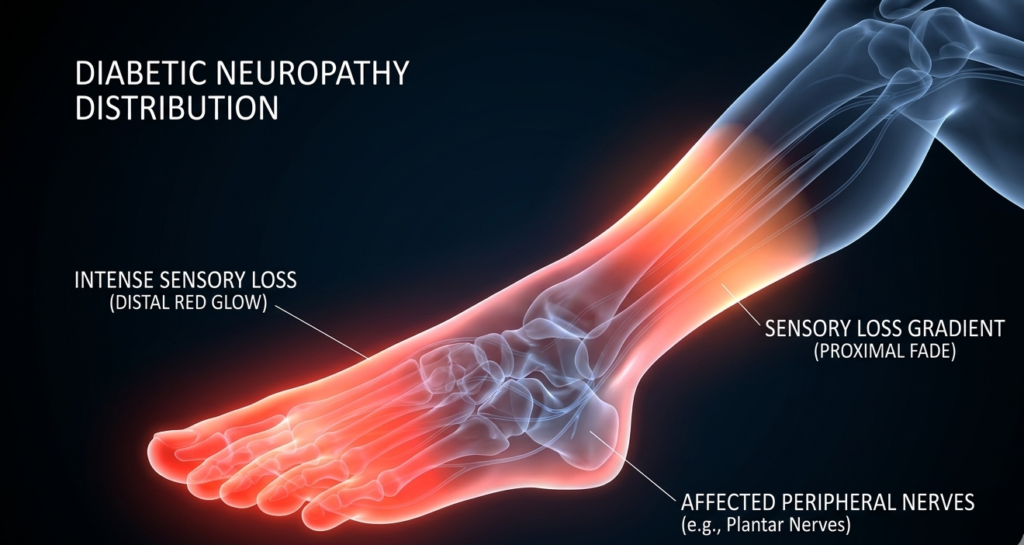
Diabetic peripheral neuropathy is classically described as a length-dependent neuropathy. This means that the longest nerve fibers in the body—those traveling from the lower spine all the way down to the toes—are the first to suffer from oxygen deprivation and metabolic stress.
Consequently, symptoms almost always begin at the very tips of the toes. Over months and years, the symptoms slowly march upward, enveloping the foot, the ankle, and the calf. By the time the neuropathy reaches the knee, the longest nerves of the upper extremities (the fingertips) begin to become involved. This creates the classic “stocking and glove” distribution of sensory loss.
Clinical Symptoms: The Warning Signs
The peripheral neuropathy symptoms are broadly categorized into “Positive” symptoms and “Negative” symptoms.The symptoms of DPN are broadly categorized into “Positive” symptoms (the presence of abnormal, painful sensations) and “Negative” symptoms (the absence of normal sensations).
1. Positive Symptoms (Early Stage Neuropathy)
These symptoms typically manifest in the early to intermediate stages of the disease when the nerves are damaged but still actively firing misfiring signals to the brain. These symptoms are often worse at night and can severely disrupt sleep architectures.
- Paresthesia: A persistent tingling or “pins and needles” sensation, almost as if the foot has fallen asleep but never wakes up.
- Burning and Electrical Pain: Patients frequently describe the pain as a burning sensation on the soles of the feet, or sudden, sharp, shooting pains that feel like an electrical shock darting through the toes.
- Allodynia (Hypersensitivity): This is a severe clinical red flag. Allodynia occurs when a normally painless stimulus causes excruciating pain. A patient may find the mere weight of a bedsheet resting on their toes to be agonizingly painful.
- Hyperesthesia: An exaggerated, overly intense response to a mild pain stimulus (e.g., a mild stubbed toe causing overwhelming, disproportionate agony).
2. Negative Symptoms (Late Stage Neuropathy)
As the disease progresses and the nerve fibers undergo complete necrosis (death), the painful misfiring stops, and the nerves simply go silent. This is the most dangerous phase of the disease.
- Profound Numbness: The patient completely loses the ability to feel pain, pressure, or touch. They can step on glass, sustain a severe burn from bathwater, or wear tight shoes that cause friction blisters without feeling a single thing.
- Thermal Dysregulation: The inability to distinguish between hot and cold.
- Loss of Proprioception: The brain loses its sense of where the feet are in space. Patients may describe feeling as though they are “walking on cotton,” “walking on thick carpets,” or wearing heavy socks even when barefoot. This leads to a widened, unsteady gait and a significantly increased risk of falls.
3. Autonomic and Motor Symptoms
While DPN primarily affects sensory nerves, it also impacts motor nerves (controlling muscles) and autonomic nerves (controlling involuntary functions).
- Muscle Atrophy: Weakness in the intrinsic muscles of the foot.
- Structural Deformities: As foot muscles weaken, the biomechanics of the foot alter, leading to hammer toes, claw toes, and high arches. This creates abnormal pressure points on the sole of the foot.
- Anhidrosis (Dry Skin): Damage to the autonomic nerves stops the sweat and sebaceous glands in the feet from working. The skin becomes severely dry, thick, and prone to deep cracking (fissures), creating an easy entry point for bacterial infections.
Clinical Comparison: Positive vs. Negative Neuropathy
| Clinical Feature | Positive Symptoms (Active Misfiring) | Negative Symptoms (Nerve Death) |
|---|---|---|
| Stage of Disease | Usually Early to Intermediate. | Advanced / Late Stage. |
| Primary Sensation | Burning, tingling, electrical shocks. | Numbness, deadness, “walking on cotton.” |
| Pain Response | Exaggerated (Allodynia, Hyperalgesia). | Absent (Cannot feel injuries or trauma). |
| Primary Clinical Risk | Severe sleep disruption, chronic pain, depression. | Unnoticed ulcers, deep infections, gangrene, amputation. |
The Devastating Cascade: Charcot Foot and Ulceration
The combination of severe numbness (negative symptoms), dry cracking skin (autonomic symptoms), and structural foot deformities (motor symptoms) creates a perfect storm for amputation.
Because the patient cannot feel abnormal pressure, repetitive stress on a specific part of the foot (like a bunion) causes a massive callous to form. Eventually, the tissue beneath the callous breaks down, forming a deep, painless diabetic ulcer. Due to poor diabetic blood flow, this wound cannot heal, rapidly leading to osteomyelitis (bone infection) and gangrene.
In severe cases, the bones of the foot weaken and micro-fracture without the patient noticing. They continue to walk on the broken bones, causing the entire arch of the foot to collapse outward—a severe, disabling condition known as Charcot Neuroarthropathy.
Diagnostic Protocols for DPN
Timely diagnosis relies on highly specific clinical examinations during routine diabetic check-ups.
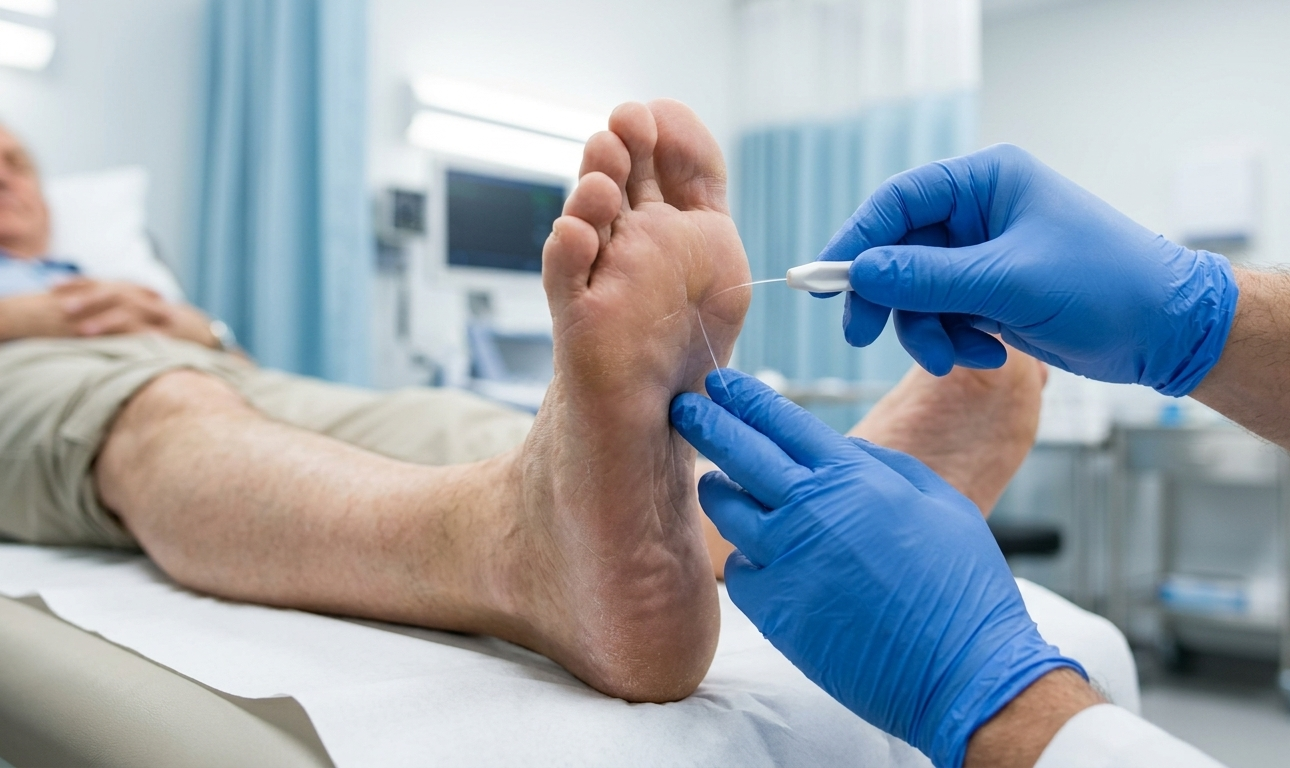
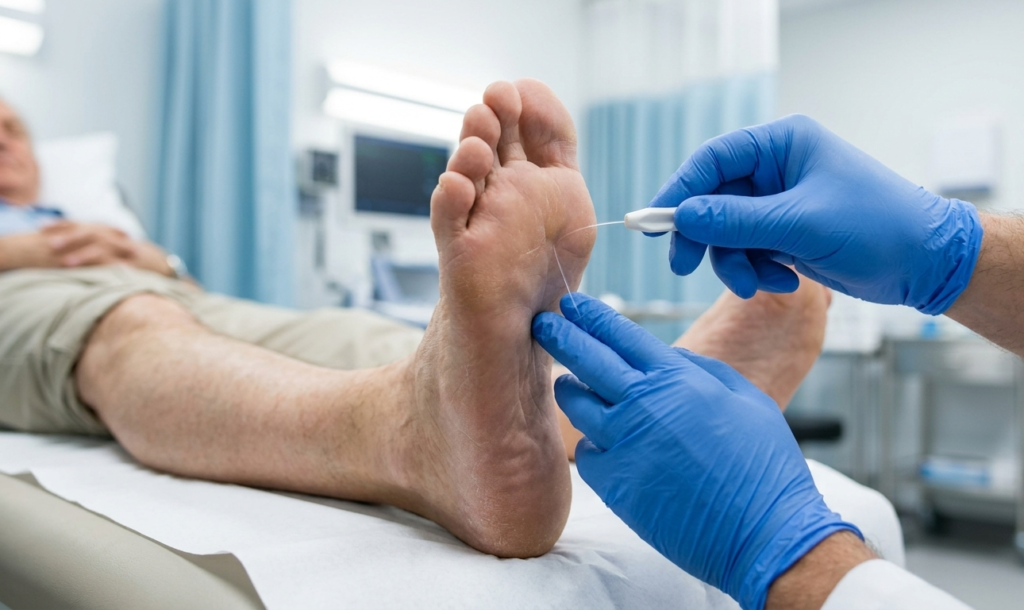
- 10-Gram Semmes-Weinstein Monofilament Test: The gold standard for clinical screening. A physician presses a specialized, flexible nylon wire against specific pressure points on the sole of the patient’s foot. If the patient cannot feel the monofilament buckling, they have lost “protective sensation” and are at high risk for ulceration.
- 128-Hz Tuning Fork Test: Used to assess the loss of vibratory sensation, which is often the very first sensory modality to disappear. The vibrating fork is placed on the bony prominence of the big toe.
- Ankle Reflexes: A reflex hammer is used on the Achilles tendon. An absent or severely diminished ankle-jerk reflex is a strong indicator of neuropathy.
- Nerve Conduction Studies (NCS) and Electromyography (EMG): In complex or atypical cases, neurologists use these electrical tests to measure the exact speed and strength of the electrical signals traveling through the peripheral nerves, definitively quantifying the extent of the damage.
Management and Treatment Strategies
Currently, there is no medical cure to reverse diabetic nerve damage. The overarching goal of treatment is to halt the progression of the disease and aggressively manage chronic pain.
- Strict Glycemic Control: The absolute most critical intervention. Maintaining an HbA1c below 7.0% prevents further biochemical damage to the vasa nervorum and preserves remaining nerve function.
- Pharmacological Pain Management: Over-the-counter painkillers are generally ineffective for nerve pain. Physicians prescribe specific neuroactive medications to calm the misfiring nerves. First-line treatments include anticonvulsants (like Pregabalin or Gabapentin) and Serotonin-Norepinephrine Reuptake Inhibitors (SNRIs like Duloxetine).
- Daily Podiatric Vigilance: The patient must become their own greatest advocate. This involves inspecting the bottom of the feet every single night with a mirror, never walking barefoot, applying heavy emollients to prevent skin cracking, and wearing specialized diabetic footwear designed to offload high-pressure areas.
⚖️ Medical Disclaimer
Disclaimer: The information provided on MedNode, including text, graphics, images, and other material contained on this website, is for educational and informational purposes only. It is not intended as a substitute for professional medical advice, diagnosis, or treatment. Always seek the direct advice of your physician or other qualified healthcare provider with any questions you may have regarding a medical condition. Reliance on any information provided by MedNode is solely at your own risk.