


In a fitness-obsessed culture, shedding a few pounds is usually celebrated. However, when the scale drops rapidly without any changes to your diet, exercise routine, or lifestyle, it is not a metabolic miracle—it is a glaring clinical red flag.
In the medical community, unexplained weight loss is considered a primary indicator of underlying systemic disease, and in many cases, it serves as the very first symptom of a hidden malignancy. Recognizing the physiological difference between healthy fat loss and disease-driven muscle wasting (cachexia) is critical for early detection and improving survival rates.
🩺 A Clinical Perspective from the Wards
“During clinical rotations in internal medicine and oncology, one of the most concerning chief complaints a patient can present with is: ‘I am unexplained weight loss, and I don’t know why.’ While patients are sometimes initially pleased to fit into smaller clothes, the underlying reality often shifts the diagnostic focus immediately toward ruling out malignancy. I frequently observe that by the time a patient is referred to an oncologist for sudden weight loss, the systemic effects of the disease are already well underway. Bridging the gap between a patient noticing their clothes fitting loosely and a physician ordering the correct diagnostic imaging is vital. We are trained to treat unintentional weight loss not as a standalone symptom, but as a physiological alarm bell.”
What Exactly Constitutes “Unexplained” Weight Loss?
Physicians do not panic over fluctuations of one or two pounds. The clinical threshold for concern is highly specific. Clinically significant unexplained weight loss is defined as an unintentional drop of 5% or more of your total body weight within a period of 6 to 12 months.
For example, if you weigh 200 pounds (90 kg) and unexpectedly lose 10 pounds (4.5 kg) over a few months without dieting or increasing physical activity, this warrants an immediate medical evaluation. In older adults, even a lower threshold of weight loss can be a sign of a serious underlying condition.
The Pathophysiology: Why Cancer Causes Weight Loss
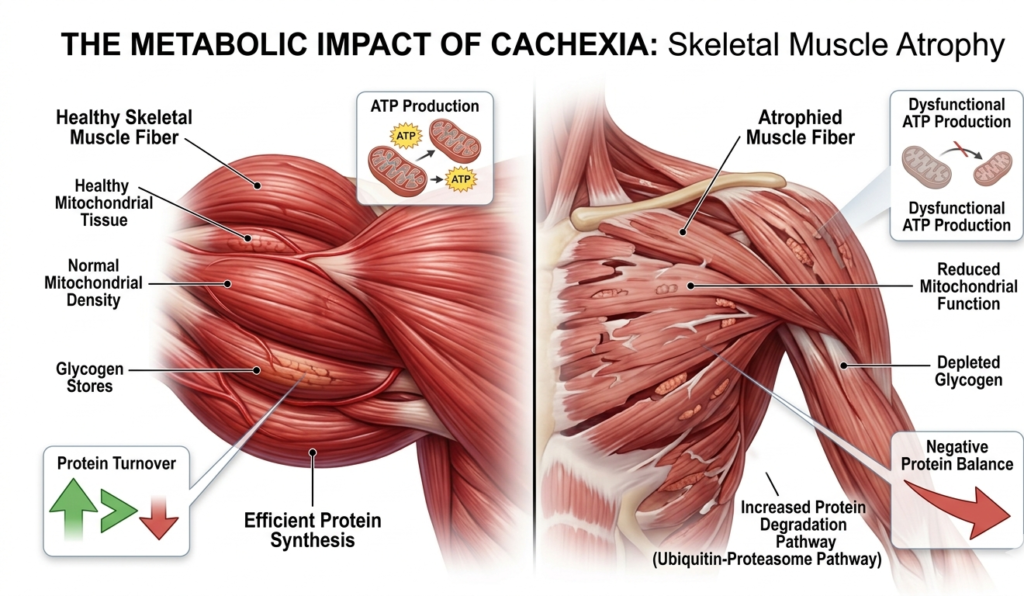
Unlike standard weight loss, where the body burns stored adipose (fat) tissue due to a caloric deficit, cancer-induced weight loss is a complex metabolic crisis known as Cancer Cachexia.
Cachexia is a devastating wasting syndrome characterized by the simultaneous loss of both skeletal muscle mass and fat tissue. You cannot reverse cachexia simply by eating more calories. It occurs due to several overlapping mechanisms:
- Hypermetabolism: Cancer cells divide aggressively and endlessly. To fuel this rapid growth, tumors hijack the body’s metabolic pathways, dramatically increasing the resting energy expenditure. The tumor acts as a metabolic parasite, draining the host’s nutritional reserves.
- Inflammatory Cytokines: The immune system detects the growing tumor and releases inflammatory proteins (such as TNF-alpha and Interleukin-6). While intended to fight the cancer, these cytokines accidentally suppress appetite and alter the way the brain senses hunger.
- Mechanical Obstruction: Tumors in the gastrointestinal tract (esophagus, stomach, pancreas, or colon) can physically block the passage of food, cause severe pain when eating, or prevent the intestines from properly absorbing vital nutrients.
Clinical Red Flags: When to See an Oncologist
If your unexplained weight loss is accompanied by any of the following systemic symptoms, you must bypass standard dietary explanations and seek immediate oncological or comprehensive medical evaluation.
1. Severe Night Sweats and Unexplained Fevers
Waking up drenched in sweat, to the point of needing to change your sheets, combined with low-grade, persistent fevers, is a hallmark sign of systemic inflammation.
- Associated Malignancies: Hodgkin’s and Non-Hodgkin’s Lymphoma, Leukemia, and Renal Cell Carcinoma.
2. Difficulty Swallowing (Dysphagia) or Early Satiety
If it feels like food is getting “stuck” in your chest, or if you feel completely full after eating only a few bites of a meal (early satiety), a structural issue is likely preventing nutritional intake.
- Associated Malignancies: Esophageal cancer, Gastric (stomach) cancer, and Ovarian cancer.
3. Painless Jaundice or Severe Abdominal Pain
A yellowing of the skin or the whites of the eyes (jaundice), especially when completely painless, is a classic presentation of biliary or pancreatic obstruction. This is often accompanied by pale stools and dark urine.
- Associated Malignancies: Pancreatic cancer, Liver cancer, and Cholangiocarcinoma (bile duct cancer).
4. Changes in Bowel Habits and Blood in the Stool
Unintentional weight loss paired with alternating bouts of diarrhea and constipation, pencil-thin stools, or visible blood (bright red or dark, tarry stools) requires immediate endoscopic investigation.
- Associated Malignancies: Colorectal cancer.
Clinical Comparison: Benign vs. Malignant Weight Loss
| Clinical Feature | Typical Benign Causes (e.g., Hyperthyroidism, Stress) | Malignant Causes (Cancer Cachexia) |
|---|---|---|
| Appetite | Often increased or completely normal. | Severely decreased (Anorexia) or early satiety. |
| Tissue Lost | Primarily adipose (fat) tissue. | Both adipose tissue and significant skeletal muscle. |
| Energy Levels | May feel jittery, anxious, or hyperactive. | Profound, unresolving fatigue and weakness (Asthenia). |
| Response to Food | Weight stabilizes if caloric intake is increased. | Muscle wasting continues regardless of caloric intake. |
The Diagnostic Workup: What to Expect

In the medical community, unexplained weight loss is considered a primary indicator of underlying systemic disease, your physician will initiate a systematic diagnostic protocol to rule out malignancy and identify the root cause.
- Comprehensive Blood Panel: This includes a Complete Blood Count (CBC) to check for anemia, a Comprehensive Metabolic Panel (CMP) to assess liver and kidney function, and inflammatory markers like CRP and ESR. Thyroid function tests (TSH) are also mandatory to rule out hyperthyroidism.
- Cross-Sectional Imaging: A CT scan of the chest, abdomen, and pelvis is frequently the gold standard for identifying hidden solid tumors, enlarged lymph nodes, or metastatic disease.
- Endoscopic Evaluation: If gastrointestinal symptoms are present, a colonoscopy and upper endoscopy (EGD) will be performed to directly visualize the GI tract and take biopsies of any suspicious tissue.
- Tumor Markers: Depending on clinical suspicion, specific blood tests (such as CA 19-9, CEA, or PSA) may be ordered to track disease progression, though they are rarely used alone for an initial diagnosis.
Conclusion
Do not wait to see if the weight loss stops on its own. While the cause of unintentional weight loss can sometimes be benign—such as an overactive thyroid, a severe gastrointestinal infection, or unmanaged diabetes—it must always be treated as a symptom of a potentially life-threatening condition until proven otherwise. Early intervention is the absolute cornerstone of effective oncology. If you notice your clothing becoming significantly looser without effort, schedule an appointment with your healthcare provider immediately.
⚖️ Medical Disclaimer
Disclaimer: The information provided on MedNode, including text, graphics, images, and other material contained on this website, is for educational and informational purposes only. It is not intended as a substitute for professional medical advice, diagnosis, or treatment. Always seek the direct advice of your physician or other qualified healthcare provider with any questions you may have regarding a medical condition. Reliance on any information provided by MedNode is solely at your own risk.