


Losing a tooth—let alone several—is a profoundly emotional and physical challenge. It changes how you speak, how you chew, and most importantly, how you smile at the world. If you are facing this reality, you are likely standing at a major medical crossroad: choosing between traditional dentures and modern dental implants.
When comparing dental implants vs dentures, you are not just comparing two different dental products; you are comparing two entirely different clinical philosophies. One rests on top of your gums, while the other becomes a permanent part of your jawbone.
As medical professionals, we are here to strip away the marketing fluff. This guide will provide a strictly evidence-based breakdown of the pros, cons, and the painful hidden costs clinics rarely mention upfront.
The Traditional Approach: Dentures
Dentures are removable prosthetic devices designed to replace missing teeth and the surrounding gum tissue. They can be full (replacing all teeth) or partial.
The Pros of Dentures
- Non-Invasive: There is absolutely no surgery involved. No cutting, no drilling into the bone, and no recovery time.
- Lower Upfront Cost: Dentures are significantly cheaper initially, making them accessible to almost all budgets.
- Speed: You can often get a fitted set of dentures in just a few weeks.
The Cons of Dentures
- Bone Loss (The Medical Reality): Without the natural tooth root stimulating the jawbone, the bone slowly begins to resorb (melt away). Over time, this changes your facial structure, giving a “sunken” appearance.
- Instability: Even the best-fitted dentures can slip while eating or speaking, requiring messy adhesives.
- Dietary Restrictions: You will likely need to say goodbye to extremely hard, sticky, or chewy foods (like raw apples or tough steaks).
The Modern Marvel: Dental Implants
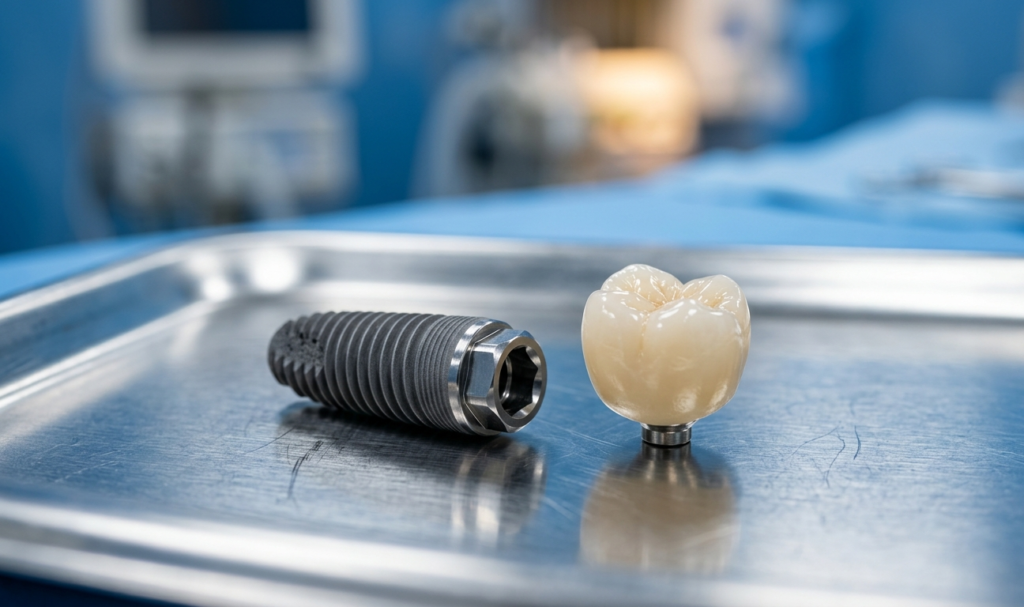
A dental implant is a surgical grade titanium post that a periodontist or oral surgeon embeds directly into your jawbone to act as an artificial tooth root. Once healed, a custom crown is attached to the top.
The Pros of Implants
- Preserves Facial Bone: Because the titanium fuses with your living bone (a process called osseointegration), it halts jawbone loss completely.
- Feels 100% Natural: They do not slip, click, or require adhesives. You brush and floss them exactly like natural teeth.
- Permanent Solution: With proper oral hygiene, dental implants boast a clinical success rate of over 95% and can last a lifetime.
The Cons of Implants
- Surgical Risks: It is an invasive surgical procedure carrying standard risks like infection, nerve damage, or implant failure.
- Lengthy Process: Healing and bone fusion can take anywhere from 3 to 6 months before the final crown is attached.
- High Initial Investment: They are extremely expensive upfront and rarely fully covered by standard dental insurance.
The Financial Truth: Hidden Costs Exposed
To fully understand dental implants vs dentures, we must look beyond the initial price tag. The cheapest option today might end up draining your wallet tomorrow.
| Feature | Dentures (Traditional) | Dental Implants (Titanium) |
|---|---|---|
| Initial Cost (per arch) | $1,000 – $3,000 | $15,000 – $30,000+ |
| Hidden Cost 1: Relining | Required every 1-2 years due to bone shrinkage ($300-$500). | None. |
| Hidden Cost 2: Replacement | Must be completely replaced every 5-7 years. | Crown may need replacement in 10-15 years, but the titanium root is permanent. |
| Hidden Cost 3: Bone Grafts | None. | If you lack sufficient bone, you will need a separate bone graft surgery first ($500-$2,000+). |
| Long-Term Value | High ongoing maintenance costs. | High upfront cost, almost zero maintenance costs. |
The Final Clinical Verdict

The ultimate choice between dental implants vs dentures comes down to your jawbone health, your budget, and your lifestyle. If you want a quick, non-surgical, budget-friendly fix, dentures remain a reliable medical tool. However, if you are looking for a permanent investment in your health, facial structure, and confidence—and you are medically cleared for surgery—dental implants are the undisputed gold standard of modern dentistry.
Medical Disclaimer: The clinical and financial information provided in this guide is purely for educational, informational, and SEO-analytical purposes on MedNode. It does not constitute professional dental advice, surgical diagnosis, or a direct clinical consultation. Dental implant surgery is a serious invasive procedure that carries inherent medical risks. Always seek the direct, personalized counsel of a board-certified periodontist, oral surgeon, or qualified dental healthcare professional before making any decisions regarding tooth replacement therapies