
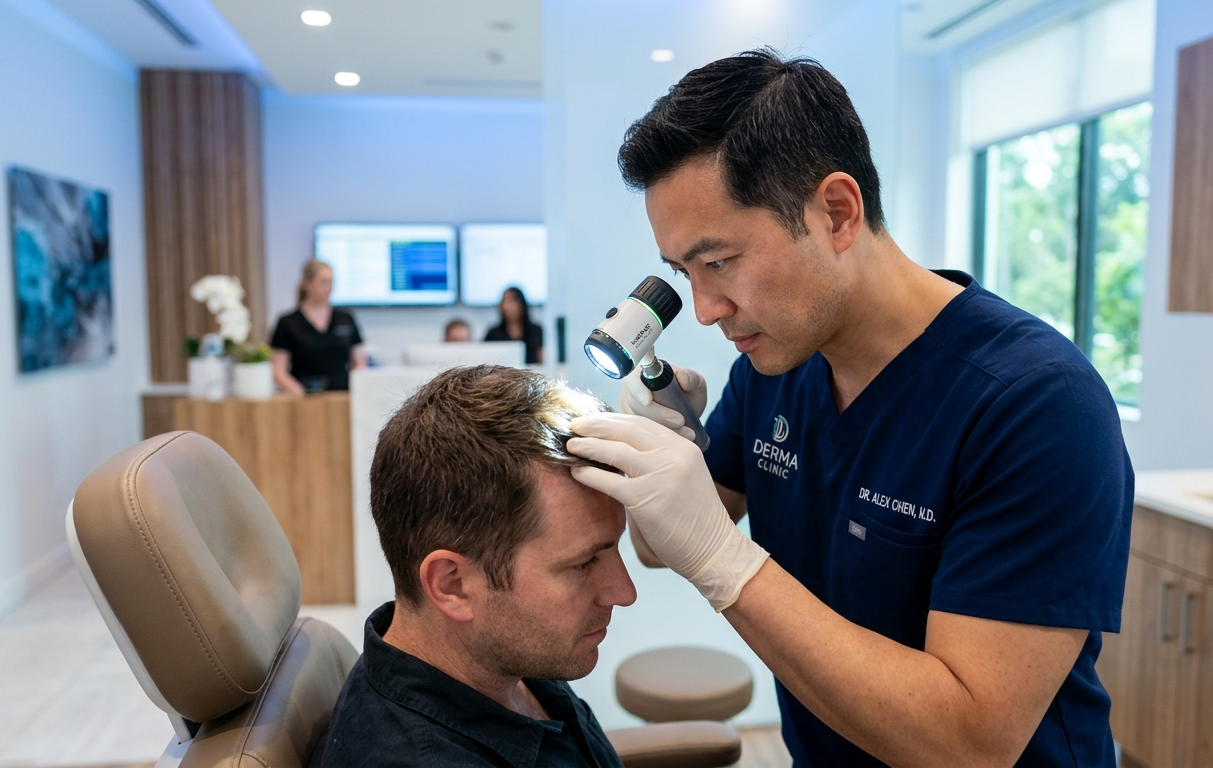
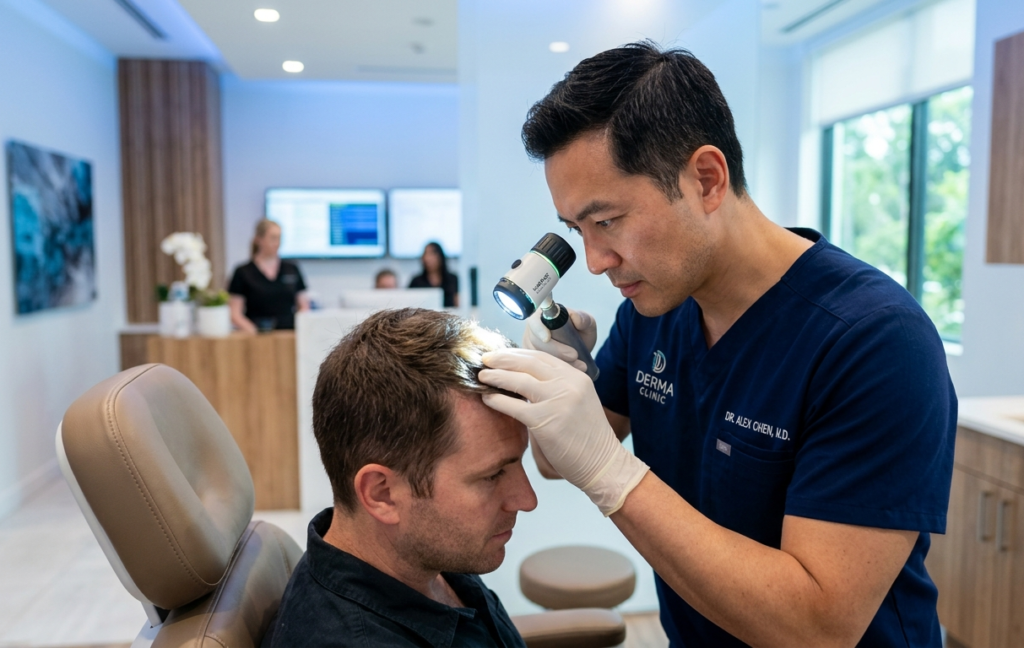
If you are looking for the clinical truth about hair transplant costs and success rates, this comprehensive guide will break down everything you need to know.
Let’s address the elephant in the room right away: Hair loss isn’t just about losing your hair; for many, it feels like losing a piece of your identity. You’ve likely spent countless hours staring at the mirror, trying every “miracle” serum, and hiding under baseball caps.
If you are reading this, you are probably ready to stop experimenting and start exploring the only permanent, clinically proven solution: a hair transplant.
However, stepping into the world of hair restoration can feel like walking into a minefield of aggressive marketing, confusing medical jargon, and wildly varying price tags. As medical professionals, we are here to cut through the noise. This comprehensive guide will break down exactly how hair transplants work, what they genuinely cost, the unvarnished truth about success rates, and how to avoid the dark side of medical tourism.
The Science of Moving Hair (Why It Actually Works)
To understand why a hair transplant is permanent, you need to understand the enemy: DHT (Dihydrotestosterone). This is the hormone responsible for shrinking hair follicles in people with genetic pattern baldness.
But here is the biological loophole that surgeons exploit: The hair at the very back and sides of your head is genetically immune to DHT. It is practically bulletproof.
A hair transplant is simply the surgical process of relocating these “bulletproof” hair follicles (the donor area) to the thinning or bald spots (the recipient area). Because these follicles retain their genetic resistance, they will continue to grow in their new home for the rest of your life.
The Two Heavyweights: FUE vs. FUT

If you’ve done any research, you’ve seen these acronyms. They represent the two primary surgical techniques used today. The difference lies entirely in how the hair is extracted.
Follicular Unit Extraction (FUE)
FUE is the undisputed modern gold standard for hair restoration.
- The Method: The surgeon uses a micro-punch tool (less than 1 millimeter in diameter) to extract individual hair follicles one by one from the back of the head.
- The Advantage: There is no linear scar. It leaves only tiny, dot-like marks that are virtually invisible, allowing you to wear your hair as short as you like. Recovery is exceptionally fast.
- The Catch: It is incredibly tedious, time-consuming, and therefore, more expensive.
Follicular Unit Transplantation (FUT)
Often called the “strip method,” this is the classic, old-school approach.
- The Method: The surgeon removes a long, thin strip of skin from the back of your scalp. This strip is handed to a team of technicians who slice it under microscopes into individual follicles.
- The Advantage: It allows surgeons to move a massive amount of hair in a single session and is generally cheaper than FUE.
- The Catch: It leaves a permanent, horizontal linear scar across the back of your head. If you like fades or short haircuts, this scar will be visible. Recovery is also more painful.
The Financial Reality: How Much Does It Really Cost?
Understanding hair transplant costs and success rates is crucial before making a decision. Let’s talk numbers. Hair transplants are elective cosmetic surgeries, meaning your health insurance will not cover a dime. The cost is determined by the technique used, the number of grafts you need, and—most importantly—the geographic location of the clinic.
| Location / Technique | Estimated Cost (USD) | Clinical Pros & Cons |
|---|---|---|
| USA / UK / Canada | $6,000 – $15,000+ | Pros: Strict medical regulations, board-certified surgeons. Cons: Prohibitively expensive for many. |
| Turkey (Medical Tourism) | $2,000 – $4,000 | Pros: All-inclusive packages, highly affordable. Cons: High risk of unregulated “black market” clinics. |
The “Turkey Hair Mill” Warning
Istanbul has become the undisputed global capital of hair transplants, offering VIP packages that include the surgery, luxury hotel stays, and airport transfers for a fraction of Western prices.
While Turkey boasts some of the finest, most skilled hair restoration surgeons in the world, the boom has created dangerous “hair mills.” In these unregulated clinics, the surgery is performed entirely by unlicensed technicians while the actual doctor is nowhere to be found. Never choose a clinic based solely on price. Your donor hair is finite; if a cheap clinic ruins it by over-harvesting, no amount of money can buy it back.
The Truth About Success Rates

Clinics love to advertise a 95% success rate, but what does that actually mean? In clinical terms, “success” refers to the Graft Survival Rate—meaning 95% of the relocated hair follicles successfully take root and survive.
However, surviving is not the same as looking good. A truly successful hair transplant requires high medical survival rates combined with artistic surgical skill.
Your ultimate satisfaction depends on three factors:
- Hairline Design: A straight, perfectly ruler-drawn hairline looks incredibly fake. A master surgeon knows how to create micro-irregularities that mimic nature.
- Donor Density: If your donor hair is naturally thin, your results will be less dense.
- Your Aftercare: If you smoke, drink heavily, or sleep on your stomach during the first crucial 14 days, you will actively kill your new grafts.
The Recovery Timeline: The “Ugly Duckling” Phase
Patience is not just a virtue in hair transplantation; it is a clinical requirement. If you expect a full head of hair in a month, you will be bitterly disappointed. Here is the realistic timeline:
- Days 1 to 10: Your scalp will look like a mild warzone. It will be red, swollen, and covered in tiny scabs. You must sleep elevated and handle your head like fragile glass.
- Weeks 3 to 8 (The Shock Loss): Prepare yourself mentally. The newly transplanted hairs will almost entirely fall out. This is called “shock loss” and is a completely normal trauma response. The root is safe beneath the skin.
- Months 3 to 4: The dormant period ends. Fine, baby-like hairs begin to sprout.
- Months 6 to 8: You will see a dramatic cosmetic improvement as the hair thickens.
- Months 12 to 18: The final, permanent result. The hair is fully matured and can be cut, styled, and dyed normally.
Protecting Your Investment (Crucial Step)
A hair transplant does not cure the underlying genetic disease of hair loss; it only replaces what is already gone. If you get a transplant but refuse to take preventative hair loss medication, your native hair will continue to fall out behind the transplanted area, leaving you with an unnatural “island” of hair.
To protect your investment, top surgeons globally mandate the use of medical therapies:
- Finasteride: An oral medication that drastically lowers scalp DHT levels, halting future loss.
- Minoxidil: A topical or oral vasodilator that stimulates blood flow to the follicles, keeping them robust.
The Final Clinical Verdict
When evaluating hair transplant costs and success rates, always choose quality over cheap prices. A modern hair transplant is nothing short of a medical marvel. It has the power to restore your confidence and rewind the clock by a decade. However, it requires a significant financial investment, rigorous post-operative discipline, and strict lifelong medical maintenance. Do your research, vet your surgeon ruthlessly, and remember: cheap surgery is the most expensive mistake you can make.
Medical Disclaimer: The clinical and financial information provided in this comprehensive guide is purely for educational, informational, and SEO-analytical purposes on MedNode. It does not, under any circumstances, constitute professional medical advice, surgical diagnosis, or a direct clinical consultation. Hair transplantation is a serious surgical procedure that carries inherent medical risks. Always seek the direct, personalized counsel of a board-certified dermatologist, licensed hair restoration surgeon, or qualified healthcare professional before making any decisions regarding alopecia treatments or elective surgeries.