


Have you ever experienced that dreaded 3:00 PM energy crash? You know the one—your brain fogs up, your eyelids feel like they are made of lead, and you find yourself desperately reaching for a third cup of coffee. For decades, we blamed poor sleep, stress, or simply “working too hard.” But what if the real culprit was hiding in your bloodstream all along?
Welcome to the era of metabolic transparency. The evolution of continuous glucose monitors 2026 (CGMs) has completely revolutionized how we understand our bodies. Once exclusive, clunky medical devices reserved strictly for managing severe diabetes, continuous glucose monitors 2026 have rapidly transformed into sleek, indispensable lifestyle tools. Today, they are as common as fitness trackers, worn by professional athletes, busy executives, biohackers, and anyone looking to unlock their peak physical and mental performance.
If you want to understand how your body truly reacts to the food you eat, the stress you endure, and the sleep you get, you are in the right place. Let’s dive deep into the groundbreaking tech of 2026 and explore why wearing a tiny sensor on your arm might be the best health decision you make this year.
1. The 2026 Hardware Revolution: Invisible, Painless, and Brilliant
If your mental image of a glucose monitor involves painful finger pricks, messy test strips, and bulky plastic devices, it is time for an update. The hardware of 2026 is nothing short of science fiction brought to life.
Goodbye Clunky Devices, Hello Micro-Tech
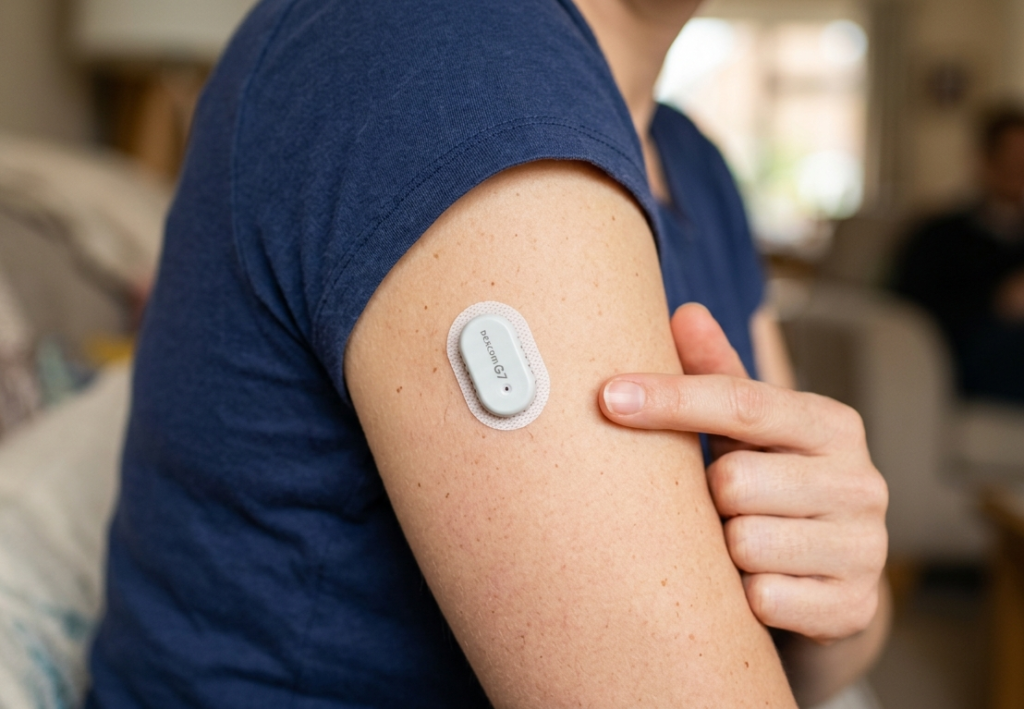
The latest generation of continuous glucose monitors 2026 is characterized by an almost invisible footprint. Sensors are now roughly the size of a small coin and as thin as a generic bandage. The application process, which used to cause anxiety for many, is now completely painless. A spring-loaded applicator safely places a microscopic, flexible filament just beneath the skin in a fraction of a second. You don’t feel it go in, and you certainly don’t feel it while you wear it.
Tubeless Freedom and Automated Delivery
For those managing Type 1 diabetes, the integration between continuous glucose monitors 2026 and insulin delivery has reached unprecedented levels of automation.
- The Insulet Omnipod 6: This system has perfected the “tubeless” experience. It communicates directly with your CGM to automatically adjust background insulin levels every five minutes.
- Tandem’s Mobi: It pushes boundaries by keeping users in automated target ranges more consistently, correcting highs and preventing lows even during high-intensity exercise or deep sleep. It is essentially an artificial pancreas working quietly in the background.
Smart Pens: The Bridge Technology
Not ready for a pump? The Medtronic MiniMed Go system seamlessly pairs the InPen (a Bluetooth-enabled smart insulin pen) with the highly accurate Abbott Instinct CGM sensor. The companion app analyzes your CGM trends and literally tells you exactly how much insulin to inject and when, removing all the stressful mental math from the equation.
Quick Comparison: The Evolution of Glucose Tracking
To truly appreciate the leap in continuous glucose monitors 2026, let’s look at how far the technology has come. Here is a quick breakdown of how glucose tracking has evolved over the years:
| Feature | Traditional Finger-Pricking | Early CGMs (Pre-2020) | 2026 Smart CGMs |
|---|---|---|---|
| Application Method | Needles and test strips (Requires actual blood drops). | Subcutaneous sensor (Required manual device scanning). | Micro-sensor with automated, real-time Bluetooth streaming. |
| Pain & Comfort Level | Moderate to High (Multiple painful pricks daily). | Mild (Slight pinch during weekly application). | 100% Painless (Micro-filament technology). |
| Data Frequency | Blind Snapshots (You only know your level at the exact second you test). | Intermittent (Data is recorded, but you must scan to see it). | 24/7 Continuous (Live data flowing automatically to your phone/watch). |
| Health Insights | Reactive (Treating extreme highs and lows after they happen). | Retrospective (Looking back at daily trends to adjust future meals). | Proactive & Predictive (AI predicts spikes up to an hour before they happen). |
| Target Audience | Exclusively for strict diabetes management. | Mostly Type 1 & Type 2 Diabetics. |
2. Beyond Diabetes: The Mainstream Metabolic Movement
Why are people without a diabetes diagnosis suddenly wearing medical-grade sensors? Because blood sugar dysregulation is not a binary switch; it is a spectrum. Millions of people suffer from insulin resistance, prediabetes, or severe reactive hypoglycemia without ever knowing it.
Here is how different groups are leveraging continuous glucose monitors 2026:
The High-Performance Athlete
Endurance athletes—like marathon runners and cyclists—use CGMs to monitor their glycogen stores in real-time. By tracking their glucose levels mid-race, they know exactly when to consume a gel or sports drink to prevent “bonking” (a sudden, catastrophic loss of energy).
PCOS and Hormonal Health
Polycystic Ovary Syndrome (PCOS) is deeply linked to insulin resistance. Women battling PCOS are using continuous glucose monitors 2026 to understand which foods trigger massive insulin spikes, allowing them to naturally manage symptoms like stubborn weight gain, fatigue, and brain fog simply by adjusting their meal sequencing.
“We used to guess what our bodies needed. In 2026, we don’t guess; we measure. A CGM gives your metabolism a voice.”
3. Discovering Your Unique “Metabolic Fingerprint”
Perhaps the most fascinating discovery brought to the mainstream by continuous glucose monitors 2026 is the concept of bio-individuality. We have been taught that a bowl of plain oatmeal is a “healthy, slow-release carb” and that a slice of pizza is “bad.” But your CGM might tell a completely different story.
The Oatmeal Lie
You might eat a bowl of steel-cut oats and watch your blood sugar absolutely skyrocket, followed by a sharp crash that leaves you starving an hour later. Meanwhile, your friend could eat the exact same bowl and experience a perfectly flat, stable glucose line.
This is your Metabolic Fingerprint. Your gut microbiome, your genetics, your muscle mass, and your current stress levels all dictate how you process carbohydrates. By wearing a CGM, you replace generic dietary guidelines with highly personalized data.
Hacks to Flatten the Curve
Users of continuous glucose monitors 2026 quickly learn powerful “glucose hacks” that allow them to eat the foods they love without the metabolic damage:
- Food Sequencing: Eating a salad (fiber) first, followed by protein and fats, and saving the carbohydrates for last can reduce a glucose spike by up to 70%.
- The Post-Meal Stroll: A brisk 15-minute walk immediately after a heavy meal allows your muscles to soak up the excess glucose from your bloodstream, effectively flattening the curve.
- Vinegar Power: Taking a tablespoon of apple cider vinegar diluted in water before a high-carb meal slows down gastric emptying, leading to a much gentler glucose response.
4. The Mental Health and Glucose Connection
One of the most overlooked benefits of the 2026 CGM revolution is its impact on mental health. Have you ever felt inexplicably anxious, irritable, or panicky?
When your blood sugar spikes dramatically and then crashes, your body interprets that rapid drop as a life-threatening emergency. It responds by flooding your system with adrenaline and cortisol (the stress hormones) to prompt your liver to release stored glucose.
This biological panic attack feels exactly like clinical anxiety. By using a CGM to identify and eliminate these massive blood sugar rollercoasters, thousands of users report a sudden, profound improvement in their daily mood stability, focus, and overall mental well-being.
5. What’s Next? The Horizon of Wearable Health Tech
As we look beyond 2026, the technology is moving at a breakneck pace. We are transitioning from simple tracking to predictive, holistic health ecosystems.
Dual-Sensor Technology
The next generation of monitors will not just track glucose. Companies are rolling out Dual-Sensor Tech capable of tracking both glucose and continuous ketone levels simultaneously. This is a massive breakthrough for individuals on ketogenic diets, athletes managing energy pathways, and doctors monitoring diabetic ketoacidosis. Lactic acid and hydration sensors are also in late-stage clinical trials.
True Smartwatch Integration
While current CGMs beam data to your Apple Watch or Garmin, they still require the physical micro-needle sensor on your arm. The holy grail of metabolic tech—non-invasive optical sensors built directly into the back of a smartwatch—is closer than ever. Through advanced spectroscopy and AI algorithms, these future devices will “read” your blood sugar directly through the skin without a single needle.
Final Thoughts
The rapid advancement of continuous glucose monitors 2026 proves that the future of medicine is proactive, not reactive. You no longer have to wait for an annual blood test to tell you that your health is failing. By tapping into your live metabolic data, you hold the power to change your diet, optimize your energy, and literally alter the trajectory of your long-term health, one real-time decision at a time.
Last article :
The Complete Clinician’s Guide to Managing Hypertension in 2026